Comparing positional accuracy of mapping and survey grade GNSS receivers relative to published control monuments in northern Albuquerque.
This project evaluated the positional accuracy of two classes of GNSS (Global Navigation Satellite System) receivers: a Trimble TDC100 mapping-grade handheld and a Carlson BRx6 survey-grade receiver. Seven known survey control monuments along New Mexico State Road 528 were used as test points. The goal was to quantify accuracy differences between mapping and survey-grade equipment and to visualize those results cartographically.
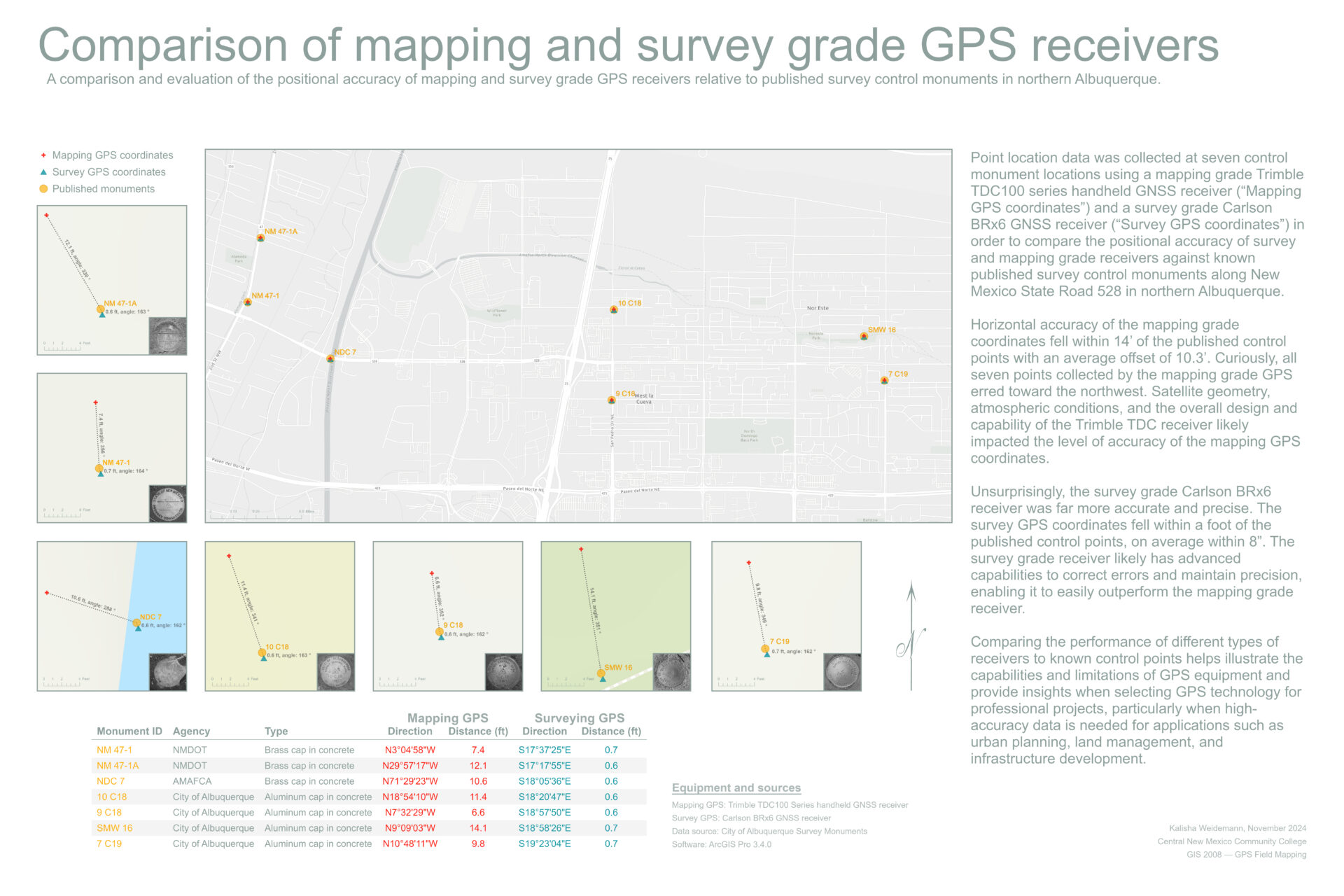
Point data were collected for each monument using both receivers, then compared against published coordinates from the City of Albuquerque’s survey control dataset. Analysis of distance and direction offsets was performed in ArcGIS Pro to assess how far each receiver’s readings deviated from the true monument positions.
Methods
- Data Collection: Mapping-grade coordinates recorded with a Trimble TDC100 handheld GNSS; survey-grade coordinates collected with a Carlson BRx6 receiver.
- Analysis: Measured offset distance and bearing between collected and published control points using ArcGIS Pro geoprocessing tools.
- Deliverables: A 24″×36″ PDF map visualizing results.
Results
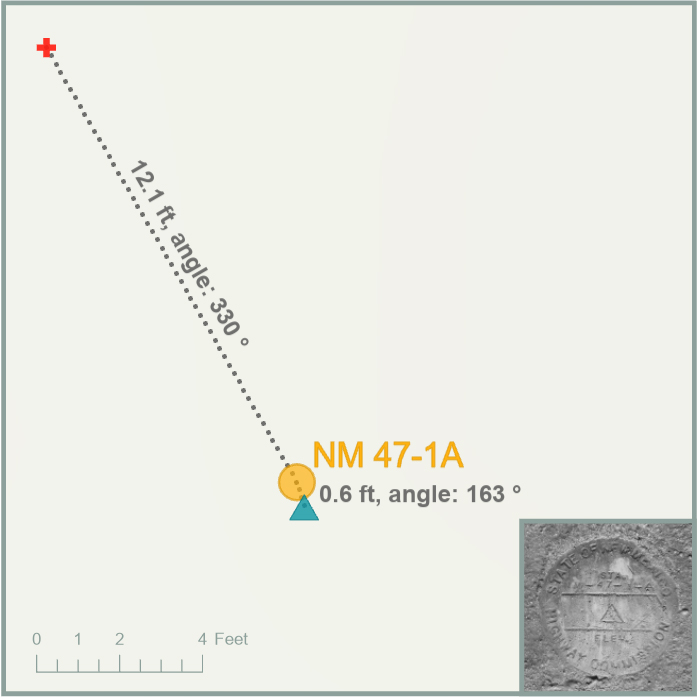
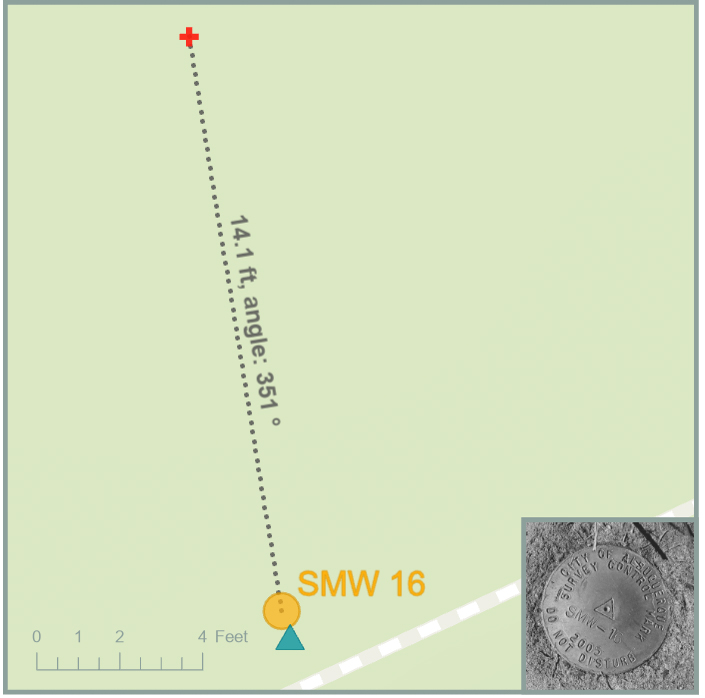
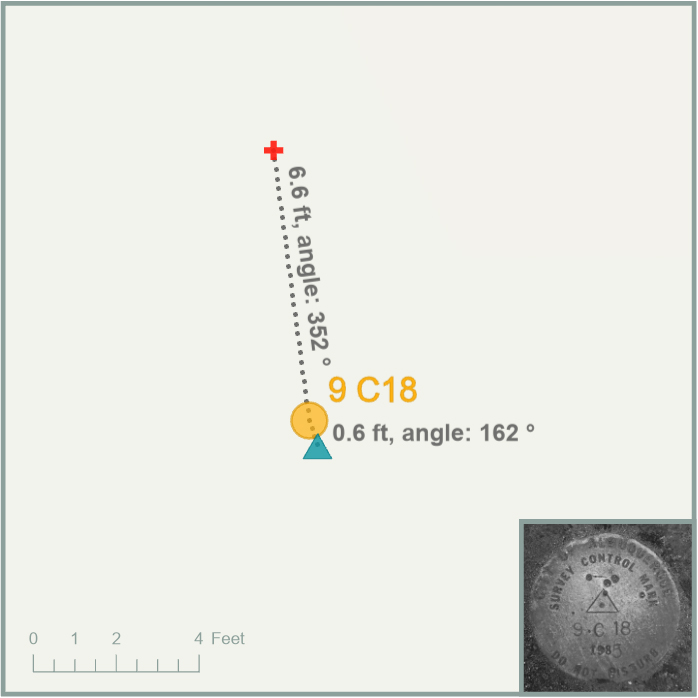
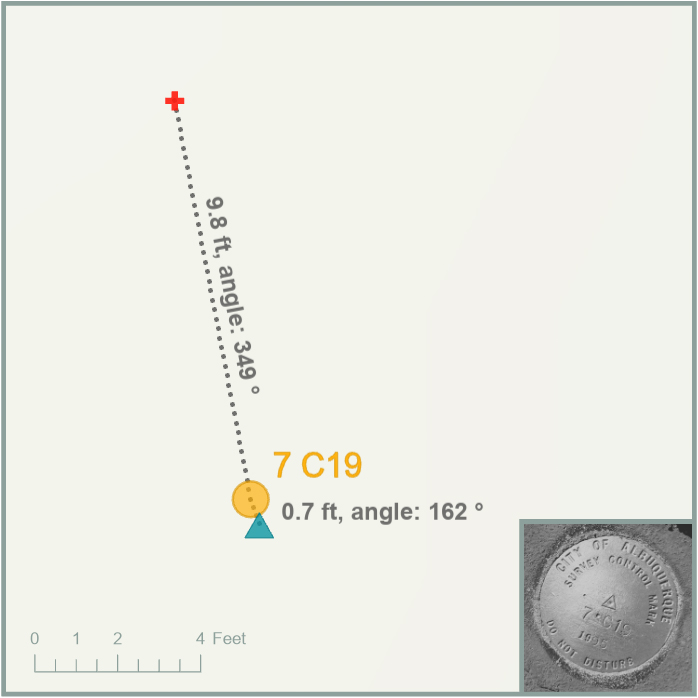
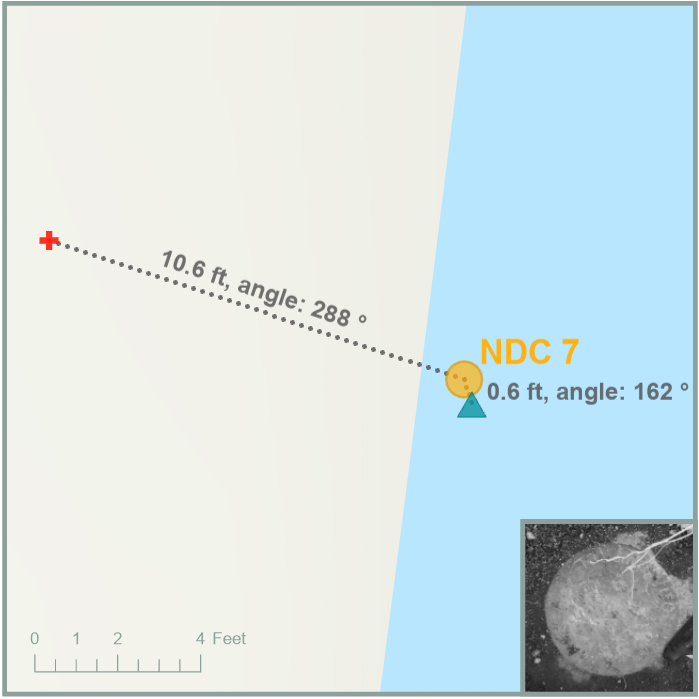
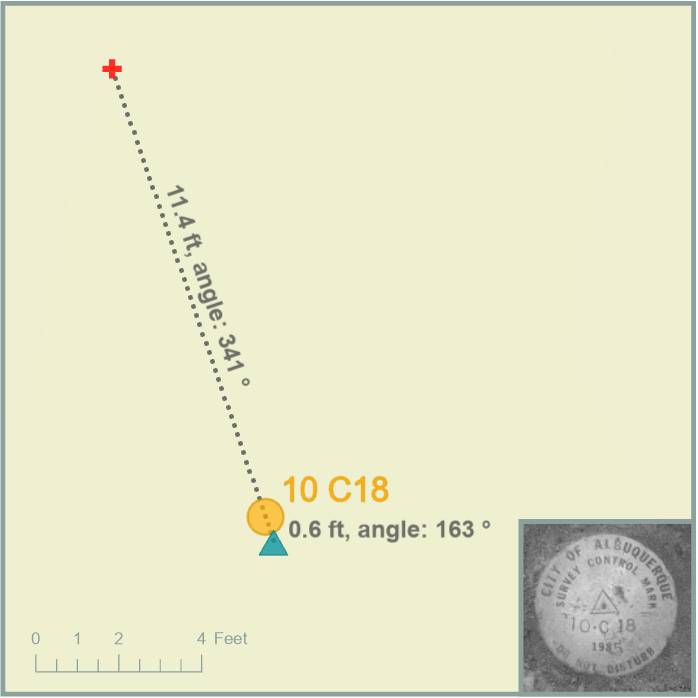
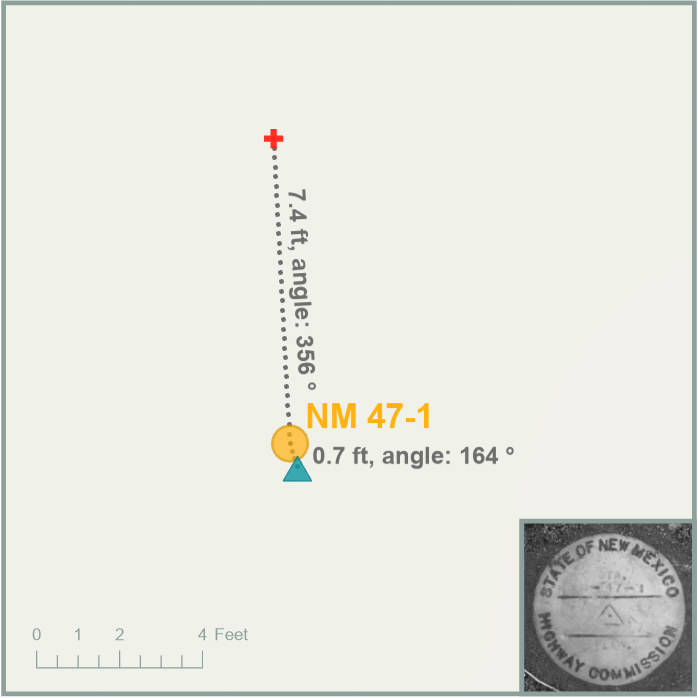
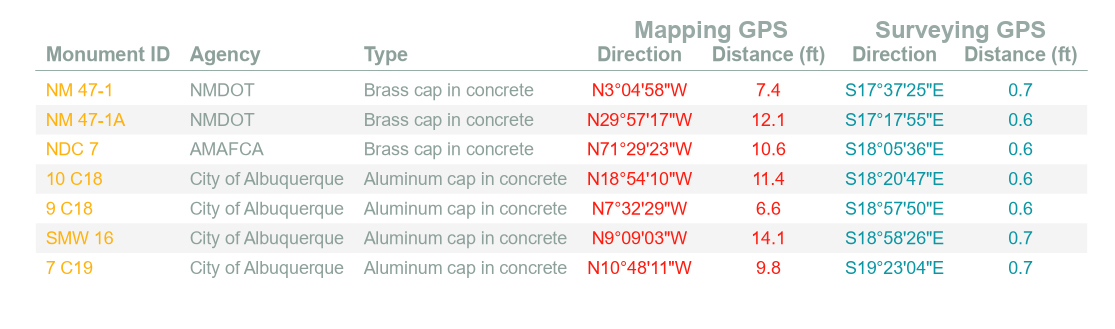
The mapping-grade receiver exhibited an average offset of 10.3 feet, with all points displaced northwest of the published monument coordinates. These errors likely reflect the influence of satellite geometry, multipath effects, and limited onboard correction capabilities.
The survey-grade receiver, in contrast, achieved sub-foot accuracy, with an average deviation of only 0.6 to 0.7 feet. Its advanced error-correction functions and precision antenna design made it consistently accurate across all sites.
Interpretation
This study demonstrates how receiver class directly affects data quality in spatial projects. Mapping-grade units are suitable for general field mapping and asset inventory, but their positional uncertainty limits use in applications demanding high spatial precision. Survey-grade receivers, while more expensive, deliver the accuracy required for land management, infrastructure development, and urban planning workflows.
Tools and software
- Hardware: Trimble TDC100 Series GNSS receiver; Carlson BRx6 GNSS receiver
- Software: ArcGIS Pro 3.4 for data analysis and cartographic design
- Data Source: City of Albuquerque Survey Monuments feature service